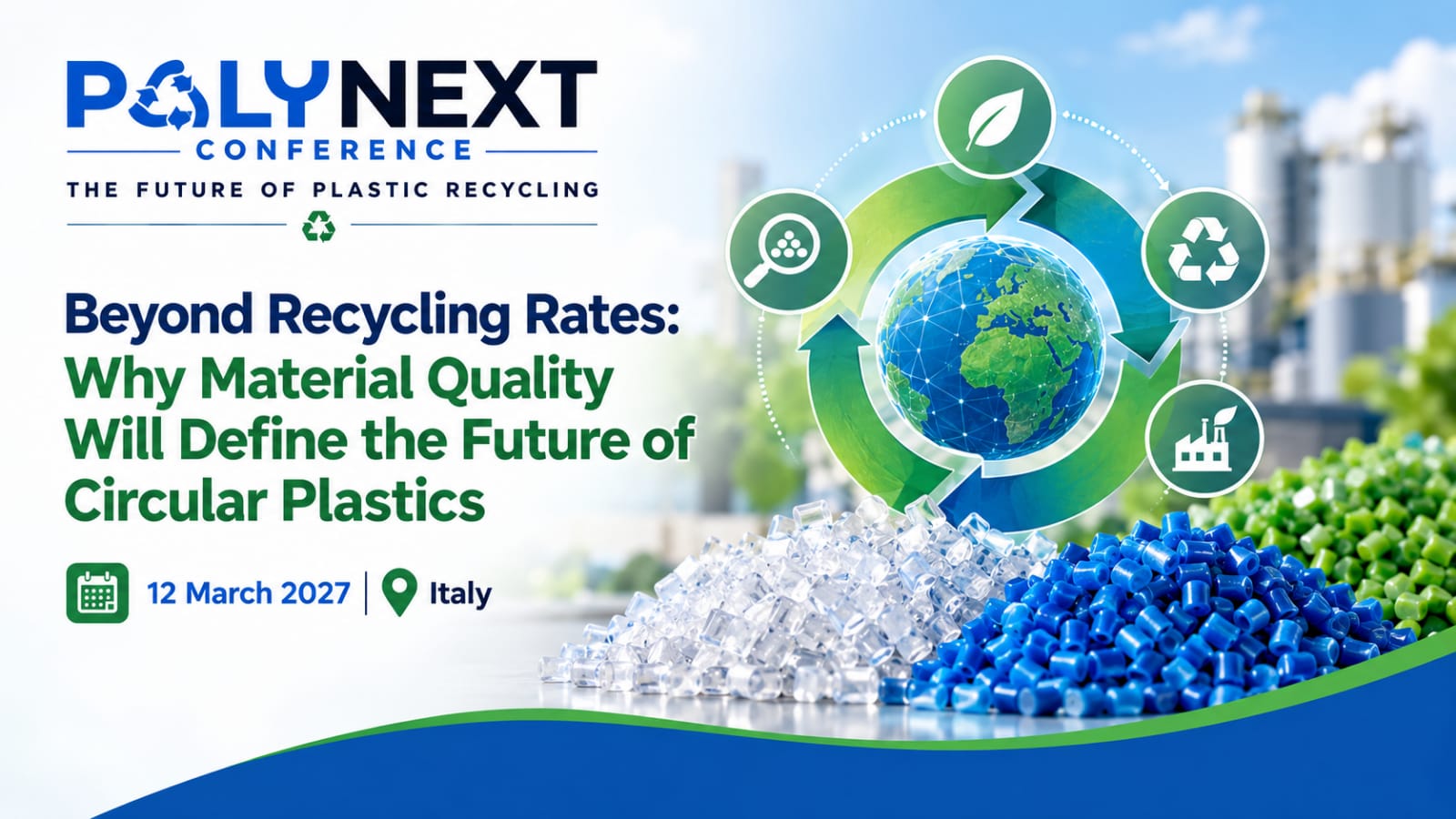
For decades, the plastics industry has measured progress by one metric: recycling rates. But as Europe tightens recycled-content mandates and brand owners commit to higher PCR targets, a harder truth is emerging. High collection numbers mean little if the output cannot reliably replace virgin resin in demanding applications. The next phase of circular plastics will be defined not by how much we collect, but by the quality of material we can consistently deliver.
The European Union is accelerating this shift. The Packaging and Packaging Waste Regulation(PPWR), applicable from August 2026, requires all packaging to be recyclable by 2030 and introduces mandatory recycled-plastic content rules. This regulatory push makes material quality a commercial necessity, not just a technical ideal.
Quality determines where recycled plastic can go
Recycled plastic is not a single uniform commodity. Its value depends on characteristics such as polymer purity, color, molecular properties, contamination levels and consistency from one batch to another.
When waste streams contain multiple polymers, additives, pigments, labels or contaminants, the resulting recycled material can become more difficult to use in demanding applications. Manufacturers may then have to blend it with virgin material or divert it toward lower-value applications.
The European Environment Agency identifies high-quality recycling as an important condition for developing secondary raw-material markets. Its assessment of PET recycling found that separate collection systems, effective sorting and appropriate recycling pathways can improve the quality of recovered material and help keep it in productive use for longer.
This is where circularity becomes more than a waste-management issue. It becomes a materials-engineering challenge.
Designing packaging for the next recycling loop
Material quality starts before the recycling plant. Packaging design influences how easily products can be collected, sorted, and processed. A package made from a compatible polymer stream can be easier to recover into a high-quality secondary material than a complex structure containing several incompatible materials.
The European Commission's Joint Research Centre is developing design-for-recycling approaches that prioritize preserving material characteristics through the recycling chain. This work underscores that secondary plastics must meet the technical demands of new applications if circularity is to scale. As a result, packaging designers, polymer producers, converters, waste managers, and recyclers must collaborate closely; circularity cannot be achieved by one part of the value chain alone.
PET bottle-to-bottle: a quality success story
PET provides one of the clearest examples of why material quality matters. The European Environment Agency's assessment of PET recycling found that the highest-quality pathway involved deposit-refund collection followed by mechanical recycling into new packaging. Keeping PET bottles in a controlled collection stream reduces material losses and contamination, helping the recovered polymer return to demanding applications.
Research also shows that with high-quality feedstock and controlled processing, PET can be recycled repeatedly into new bottles without losing performance. This demonstrates that recycling does not have to mean downgrading plastic into less demanding uses; when systems are well designed, recycled polymer can stay in high-value loops.
From recycling volume to material value
The next phase of plastics circularity will depend on the value of the material retained in the system. A tonne of heavily contaminated plastic has limited value; a tonne of well-sorted polymer that can replace virgin resin in demanding applications is a strategic raw material that reduces dependence on fossil feedstocks.
Circular strategies must therefore prioritize collection quality, sorting efficiency, polymer compatibility, decontamination, traceability, and end-market demand—not just recycling rates. For converters and packaging producers, future competitiveness will hinge less on accessing any recycled content and more on accessing recyclates with predictable technical performance. Advanced recycling technologies, including chemical routes, will also need robust quality and traceability frameworks to gain market trust.
Europe’s policy framework is creating strong incentives for recyclable design, recycled content, and secondary-material markets. But regulation alone cannot deliver high-quality circularity. The industry must connect material science, packaging design, advanced sorting, and recycling technology with real market requirements. The goal is not simply to recycle more plastic, but to preserve more of its value through successive product cycles. That shift—from recycling volume to material quality—will define the next stage of plastics circularity.
PolyNext Italy 2027
PolyNext Awards and Conference Italy (Rome, 12 March 2027) will convene polymer producers, recyclers, brand owners, and technology providers to tackle exactly these challenges—from advanced recycling and material innovation to testing, traceability, and circular business models. Join the conversation where ambition becomes specification.
Learn more and register: polynextconf.com