When we think about plastic recycling, the humble plastic bottle usually comes to mind. After years of infrastructure development, recycling clear PET water bottles and HDPE containers is relatively well established in many waste management systems.
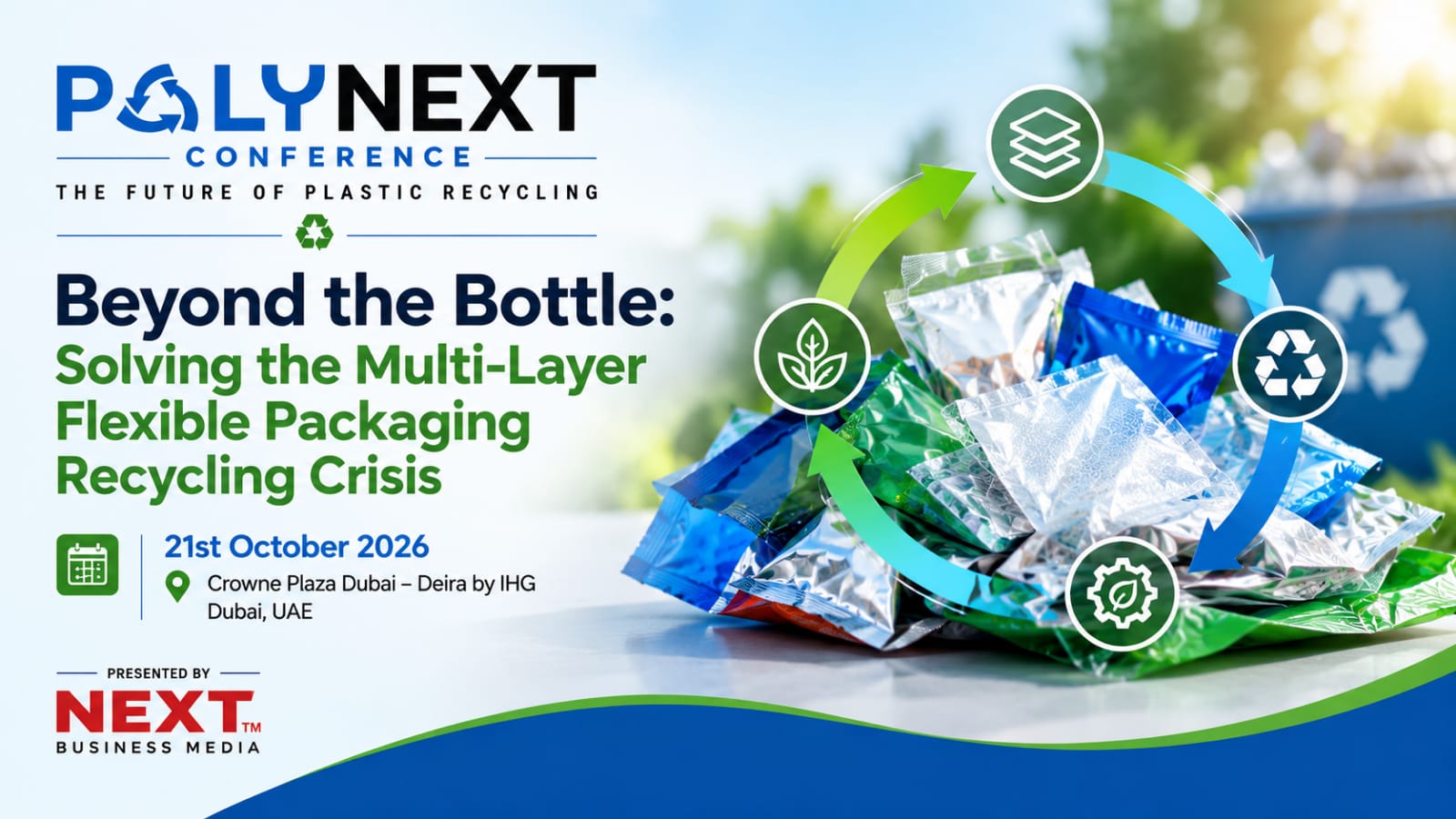
But look inside your pantry. Chip bags, stand-up pouches, coffee bags and candy wrappers tell a different story.
These are examples of multi-layer flexible packaging, one of the more challenging categories of plastic waste to recycle. While these structures provide excellent protection for food and extend shelf life, their combination of different materials can make collection, sorting and recycling more difficult.
Here is a closer look at why multi-layer flexible packaging is so challenging to recycle—and how mono-materials, compatibilizers and advanced recycling technologies are creating new pathways toward greater circularity.
The Big Problem: Too Many Layers
The same features that make flexible packaging effective for protecting products can also make it challenging to recycle. A typical chip bag may look like a single thin sheet, but it can contain multiple layers of different materials, each designed to provide a specific function.
A multi-layer pouch may contain:
•An outer layer of polyester for printing and structural strength.
•A middle layer of aluminium foil to provide a barrier against light, oxygen and moisture.
•An inner layer of polyethylene for heat sealing and product protection.
When these materials are bonded together, conventional mechanical recycling systems cannot easily separate the individual layers. If multi-layer packaging enters a recycling stream designed for simpler plastic structures, it can complicate sorting and processing and may affect the quality of the recycled material.
As a result, many flexible packaging formats remain difficult to recover through conventional recycling systems, highlighting the need for improved packaging design, collection and sorting systems, and new recycling technologies.
Breaking the Crisis: Three Solutions Shaping the Future
Fortunately, the polymer industry is not standing still. Innovators, chemical companies, and packaging designers are tackling this crisis from three distinct angles.
1. Designing with Just One Material (Mono-materials)
The simplest way to address a recycling challenge is to consider recyclability at the design stage. Mono-material packaging is gaining attention as brands and packaging manufacturers explore ways to replace conventional multi-material structures with recyclable alternatives.
A commercial launch by Borouge, Siegwerk and TPN Food Packaging demonstrates this approach. The companies developed a fully recyclable mono-material polyethylene (PE) barrier stand-up pouch for oxygen-sensitive dry products such as nuts and pet food. The pouch uses a PE-based triplex laminate with an oxygen-barrier coating and de-inking technology designed to support recycling and the production of higher-quality recycled PE.
Mono-material structures can simplify packaging composition while retaining important properties such as stiffness, mechanical strength, seal integrity and barrier performance. However, designing a mono-material package that matches the protection and performance of more complex multi-material structures remains a technical challenge for some applications.
2. Advanced Chemical Recycling
For complex multi-material packaging that is difficult to process through conventional mechanical recycling, chemical recycling offers another potential pathway. Technologies such as pyrolysis use heat in the absence of oxygen to break down plastic waste into hydrocarbon-rich products that can be further refined and upgraded into feedstocks for new plastics.
When appropriately processed and certified, these recycled feedstocks can be used to manufacture new plastics with properties comparable to virgin materials, including for some demanding applications. However, commercial-scale deployment, economic viability, energy requirements and lifecycle emissions remain important areas of evaluation and development.
3. Smart Compatibilizers
Another mechanical recycling approach involves using compatibilizers—special additives that help improve compatibility between otherwise incompatible polymers. When plastics such as PE and PP are blended during processing, these additives can act as molecular bridges, improving interfacial adhesion and reducing phase separation.
By improving the compatibility of mixed polymer blends, compatibilizers can enhance properties such as tensile strength, impact resistance and elongation. This can expand the potential applications of recycled plastic blends, although the resulting material properties can still differ from those of virgin polymers and must be matched carefully to the intended application.
The Road Ahead
Solving the flexible packaging crisis requires collaboration across the entire supply chain. Brands must commit to simplifying their packaging designs, policymakers need to update sorting infrastructure, and advanced recycling technologies must scale up commercially. Investors and brands can further de-risk scale-up through long-term offtake agreements and clear design commitments.
By moving beyond the bottle and mastering the recycling of flexible films, the plastics industry can take a massive, vital step toward a truly circular economy.
These themes will be central to discussions at PolyNext Awards & Conference . Join the conversation at PolyNext Awards & Conference Dubai 2026, where recyclers, brands, technology providers, and investors are shaping the next chapter of plastics circularity.