Digital Product Passports (DPPs) are becoming an important part of Europe’s move toward more transparent and circular product systems. For plastic manufacturers, DPPs can change how information about materials, production, recycled content, product use, and end-of-life options is collected, managed, and shared across the value chain.
What is a Digital Product Passport?
A Digital Product Passport (DPP) is a digital record containing information about a product and, depending on the applicable legislation, its materials, components, performance, environmental characteristics, and end-of-life options.
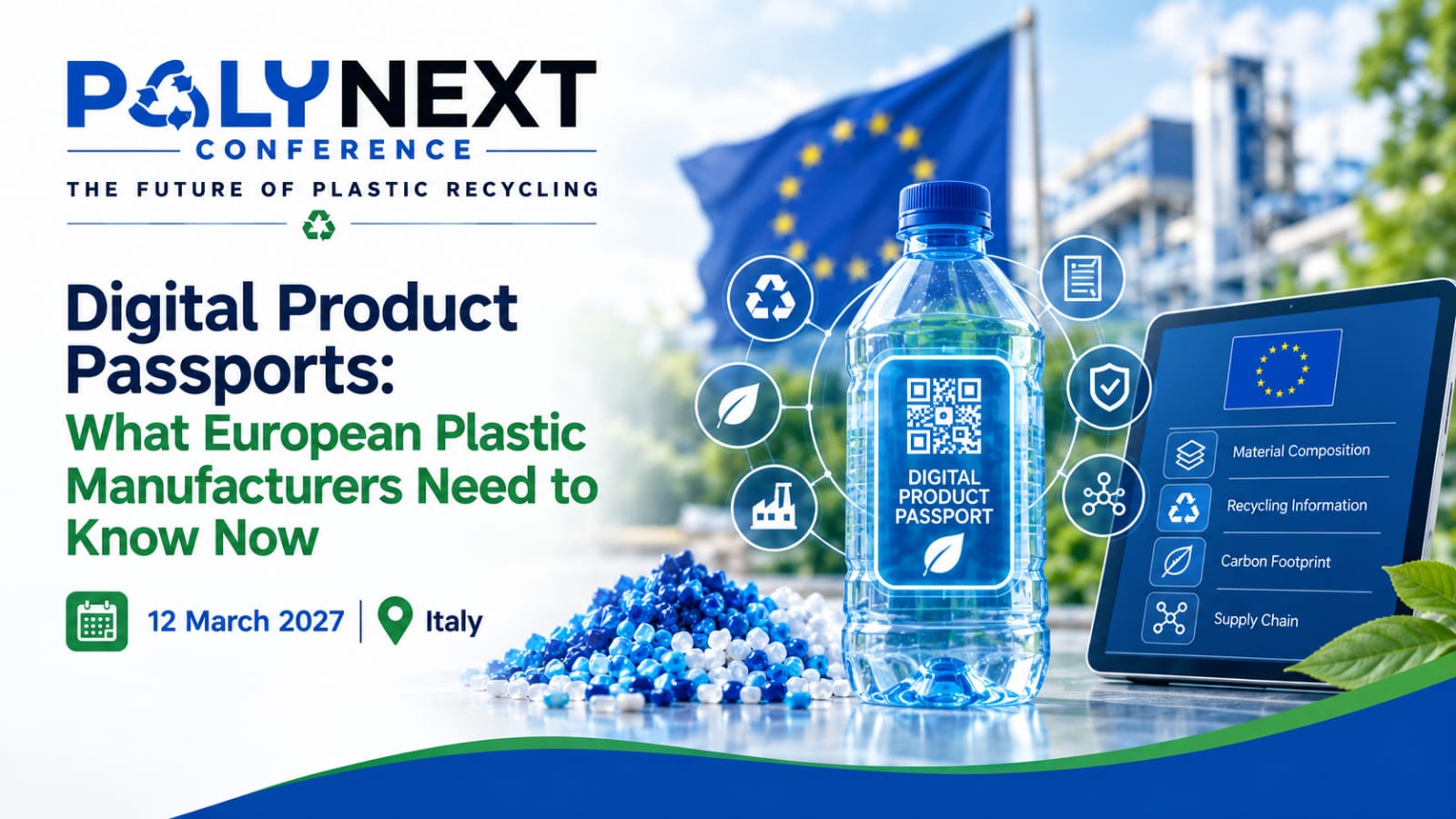
The data can be accessed through a unique product identifier, such as a QR code or Data Matrix code, and made available through the EU’s Digital Product Passport system. This information can help manufacturers, suppliers, customers, recyclers, regulators, and other stakeholders understand a product and its characteristics throughout its lifecycle.
The European Union is developing the DPP framework under the Ecodesign for Sustainable Products Regulation (ESPR, Regulation (EU) 2024/1781).Requirements will be introduced progressively through product-specific delegated acts rather than applying uniformly to every product or manufacturer. The EU’s DPP registry is expected to support the implementation of these requirements, while specific compliance timelines will depend on the relevant product legislation and delegated act.
Why does it matter for plastics?
Plastic products often involve complex material and supply chains. A single product can include different polymers, additives, coatings, recycled materials, and components sourced from several suppliers. Maintaining accurate information about these materials can therefore be important for both compliance and circularity.
DPP-related requirements may increase the need for reliable data on polymer composition, recycled content, product origin, durability, and recyclability. Manufacturers may also need to improve how they collect and verify information from suppliers.
This makes data management an increasingly important part of plastics manufacturing. Companies that still rely heavily on disconnected spreadsheets or manual information exchange may need to develop more structured systems for product data and traceability.
Supporting circular plastics
Better product information can also support recycling and resource efficiency. When recyclers have access to reliable information about material composition and other relevant characteristics, they can make better decisions during sorting, processing, and recovery.
For manufacturers, this can encourage greater attention to design choices as well. Selecting materials that are easier to identify, recycle, or recover can become increasingly relevant as Europe strengthens its circular economy policies.
DPPs may also support greater transparency around recycled content and other product characteristics. However, the precise information required will depend on the relevant product category and the product‑specific delegated acts adopted under ESPR.
What should manufacturers do now?
European plastic manufacturers can begin by understanding which of their products may fall under current or future DPP requirements. They can then review how product information is currently collected, verified, stored, and shared.
Key areas to consider include supplier data, material composition, recycled content, product identification, traceability, and data governance. Companies should also consider how their existing enterprise and manufacturing systems could connect with future digital product information requirements.
Preparation does not mean that every manufacturer must implement the same technology immediately. The priority is to establish reliable, consistent, and traceable product data that can adapt as product‑specific DPP delegated acts are adopted and come into force.
PolyNext Awards and Conference Italy
For the plastics industry, the transition toward Digital Product Passports is part of a wider shift toward traceability, circular design, regulatory readiness, and data-driven manufacturing. These changes will require collaboration between polymer producers, converters, packaging companies, recyclers, technology providers, and regulators.
PolyNext Awards & Conference Italy, taking place on 12 March 2027 in Italy, will provide a platform for industry leaders and experts to discuss the developments shaping the future of plastics, including circularity, sustainable materials, technology, regulation, and innovation.
As European plastics markets move toward greater transparency and circularity, understanding Digital Product Passports can help manufacturers prepare for changing requirements and evolving expectations across the value chain.
Learn more and connect with industry leaders at PolyNext Italy 2027.