For decades, the Middle East has been closely associated with petrochemical production, polymer manufacturing and rapidly growing consumer markets. Today, the region is beginning to build the infrastructure needed to connect polymer production with end-of-life recovery, creating a more circular approach to plastics.
The opportunity is significant. The Gulf has a large petrochemical and polymer manufacturing base, while growing volumes of packaging and municipal waste are creating pressure on collection, sorting and recycling systems. This combination gives the region an industrial foundation for developing circular polymer value chains, provided investment in waste management and recycling infrastructure keeps pace with polymer production.
Policy is becoming an important driver. Across the Gulf, governments are introducing measures covering packaging waste, extended producer responsibility, single-use plastics and recycling. The UAE, for example, has been developing an Extended Producer Responsibility framework covering priority waste streams. Saudi Arabia and other GCC markets are also strengthening approaches to plastic waste management and resource recovery.
At the same time, international regulations are influencing regional supply chains. The European Union’s Packaging and Packaging Waste Regulation (PPWR) is increasing the focus on recyclable packaging, recycled content and packaging design. For Middle Eastern polymer producers, converters and exporters, these requirements are making circularity increasingly relevant to market access and long-term competitiveness.
Technology is also moving from concept to commercial application. In 2025, SABIC, together with Napco National and FONTE, introduced recycled polyethylene bread packaging in Saudi Arabia using material produced from pyrolysis oil. The project demonstrates how chemical recycling can connect post-consumer waste with existing polymer production infrastructure.
Other projects are expanding the region’s resource-recovery ecosystem. BEEAH Group has been developing advanced waste-to-energy and waste-to-hydrogen capabilities in Sharjah, while Saudi Investment Recycling Company (SIRC) has been involved in major recycling and waste-management projects, including facilities focused on refuse-derived fuel and tire recycling. Together, such developments point towards a broader industrial model in which waste collection, sorting, recycling, energy recovery and polymer production become more closely connected.
However, building circular polymer systems at scale will require more than individual projects. Collection and sorting infrastructure remains uneven across the region, while the economics of producing high-quality recycled polymers can be challenging. Contamination, inconsistent feedstock and limited demand for certain recycled materials can also affect the viability of recycling operations.
Food-contact applications present another important challenge. Consistent standards, traceability and suitable processing technologies are necessary to produce recycled polymers that meet demanding performance and safety requirements. At the same time, greater regional capacity for sorting and processing could reduce dependence on exporting waste or low-value materials for treatment elsewhere.
The path to 2030 therefore depends on connecting the different parts of the value chain. Policymakers can support this transition through effective EPR systems, clear recycled-content requirements and streamlined frameworks for recycling infrastructure. Investors and developers can focus on integrated projects that connect collection and advanced sorting with mechanical or chemical recycling and reliable local offtake.
Polymer producers, converters and brand owners also have an important role. Designing packaging for recyclability, reducing unnecessary material complexity and creating long-term demand for recycled resins can help establish stronger markets for recovered materials. Greater collaboration across the value chain will be essential to make circular polymers commercially viable.
The Middle East already has many of the industrial assets needed to become a regional center for circular polymer production. The next step is to connect those assets with efficient recovery systems, appropriate technologies and consistent market demand. The shift from a linear polymer economy to closed-loop systems will be gradual, but the foundations are increasingly being established.
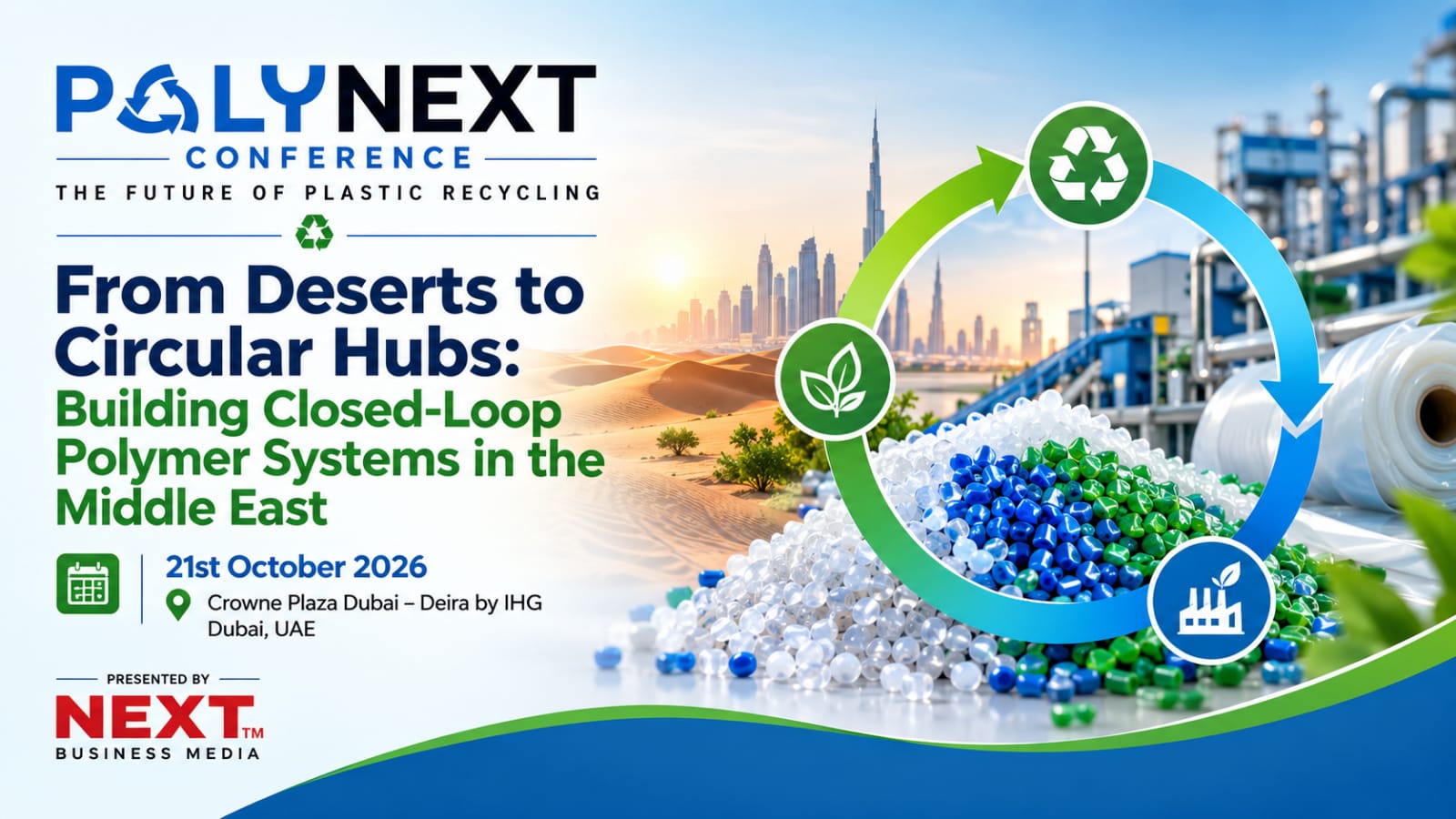
These developments will be central to discussions at PolyNext Awards & Conference Dubai 2026, where polymer producers, converters, recyclers, technology providers, investors and industry leaders will explore practical approaches to circularity, recycling, sustainable materials and the future of the polymer industry.
Join PolyNext Awards & Conference Dubai on 21 October 2026 at Crowne Plaza Dubai–Deira to connect with industry leaders and explore the technologies and strategies shaping the next generation of polymer systems.