Europe’s plastics industry is entering a defining period. The transition to a circular plastics economy is no longer driven only by voluntary commitments or sustainability targets. Regulation, customer expectations and resource-security concerns are now reshaping how plastic is designed, produced, collected and recycled.
The central challenge is clear: Europe must scale recycled plastics without compromising quality, safety or commercial performance. Recycling more plastic is important, but it is not enough. Circular plastics must become reliable, traceable and economically competitive with virgin materials.
Regulation creates market momentum
The EU Packaging and Packaging Waste Regulation entered into force on 11 February 2025 and generally applies from 12 August 2026. It introduces measures designed to reduce packaging waste, improve recyclability and increase the use of recycled materials.
From 2030, subject to specific conditions and later implementing measures, plastic packaging will need to contain minimum levels of recycled content derived from post-consumer plastic waste. These targets will vary according to packaging type and application.
The regulation creates a stronger market for recycled polymers, but it also raises expectations across the value chain. Brands and packaging producers will need dependable supplies of compliant material. Recyclers will need to demonstrate consistency, safety and origin. Manufacturers will need stronger documentation to support conformity claims.
Regulation can stimulate demand, but it cannot solve the industry’s economic challenges on its own. The long-term success of circular plastics will depend on whether companies can produce recycled materials at a competitive cost and whether buyers are willing to commit to using them.
Quality must come first
The growth of recycled plastics depends on confidence in performance. Manufacturers need materials with predictable color, purity, strength, odor, processing behavior and regulatory compliance. In applications such as food packaging, healthcare, automotive and electronics, even small variations can affect product quality and safety.
For recyclers, improving quality begins with better control of the entire process:
•More effective collection and sorting of plastic waste.
•Improved separation of polymers, colors, additives and contaminants.
•Advanced washing, filtration and extrusion systems.
•Consistent testing of incoming waste and finished recyclates.
•Clear specifications shared between recyclers, converters and brand owners.
Artificial intelligence and automated sorting can support this transformation by identifying materials more accurately and reducing contamination. However, technology is only one part of the solution. Better packaging design, improved collection systems and stronger cooperation with municipalities are equally important.
High-quality recyclate should not be treated as a lower-value substitute for virgin polymer. Where it meets demanding performance requirements, it can become a strategic industrial material.
Profitability remains essential
Circularity cannot scale without a sustainable business model. Recyclers face high capital requirements, energy costs, labor expenses, fluctuating waste volumes and competition from low-priced virgin polymers and imports.
Several measures can improve profitability:
•Long-term purchasing agreements between brands and recyclers.
•Product design that reduces sorting and processing costs.
•Investment in energy-efficient recycling facilities.
•Stable rules for recycled-content calculation and verification.
•Better collection infrastructure and more consistent feedstock.
•Pricing models that recognize quality, traceability and environmental performance.
Brands and converters also have a role to play. If customers demand recycled content only when prices are low, recyclers cannot justify the investment needed to expand capacity. Reliable offtake agreements can provide the certainty required for new facilities, modern equipment and process innovation.
Extended producer responsibility systems, green public procurement and well-designed incentives may also help close the cost gap. The objective should be to create a market in which recycled plastics compete through performance and value—not only through regulatory necessity.
Collaboration can close the gap
No single part of the plastics value chain can deliver circularity alone. Recyclers need packaging producers to design for real-world recycling systems. Brands need reliable material suppliers. Technology companies need access to operational data. Policymakers need input from industry when developing standards and implementation rules.
Collaboration should focus on measurable outcomes: higher collection rates, lower contamination, better recyclate quality, verified recycled content and stronger market demand.
Europe has the regulatory framework and technical expertise to build a competitive circular plastics sector. The next step is to connect these strengths through investment, innovation and long-term commercial partnerships.
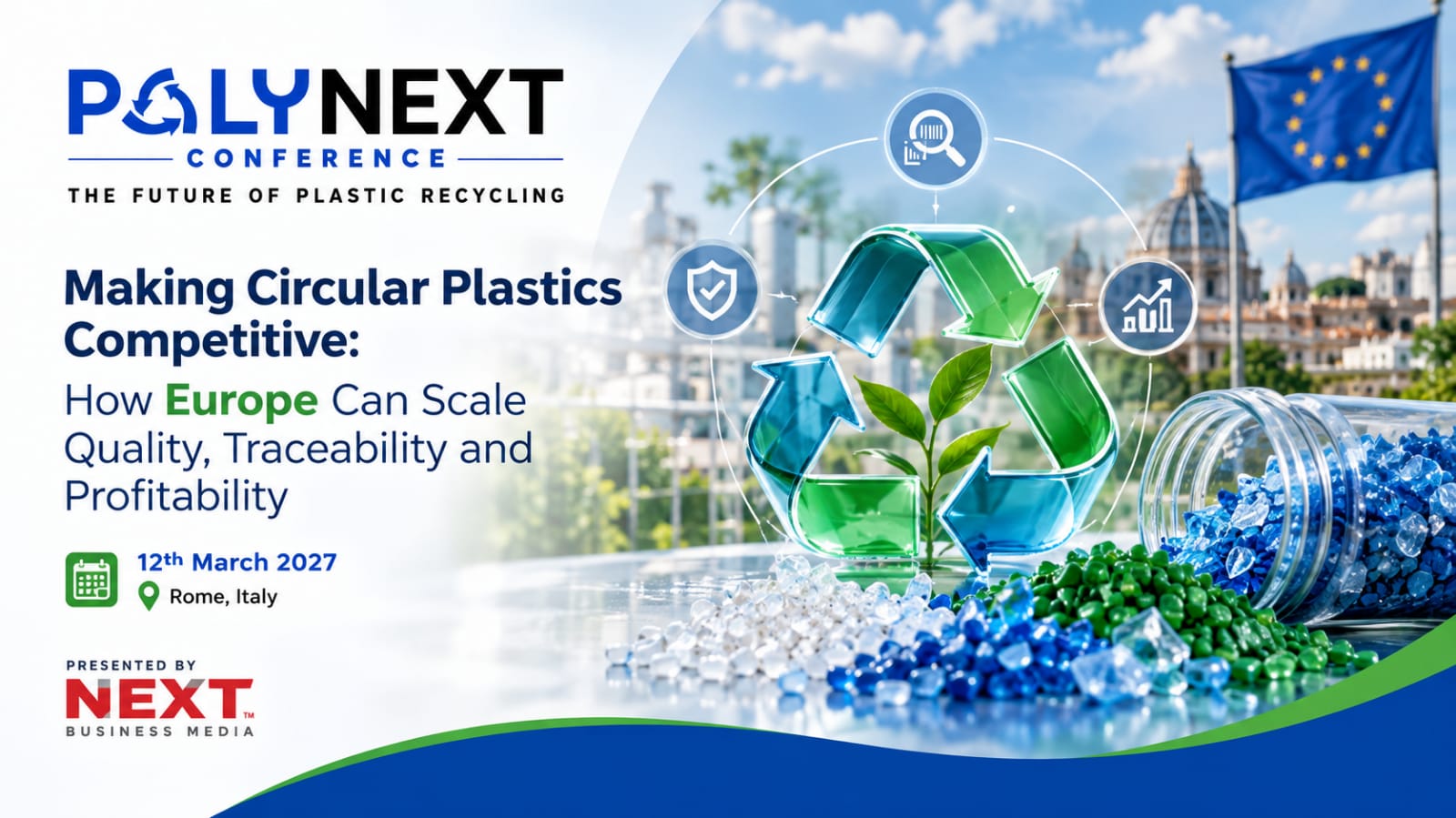
The future of circular plastics will be determined not by how much waste the industry processes, but by the value it creates from that waste. By scaling quality, traceability and profitability together, Europe can move from a compliance-driven recycling system to a resilient circular materials economy. PolyNext Awards and Conference Italy can provide an important platform for this conversation. The future of plastics will not be decided by one technology or one sector. It will be built through collaboration across the entire value chain—turning waste into trusted materials, measurable impact and lasting commercial value. PolyNext Italy 2027 is scheduled to take place in Rome on 12 March 2027.