The global battle against plastic pollution is moving beyond conventional waste management and into advanced materials engineering. For decades, recycling has been constrained by downcycling, contamination and the gradual loss of material performance. Today, researchers and manufacturers are exploring new ways to purify, reinforce and redesign recovered polymers for demanding applications.
From recycled marine nylon and nanocomposites to infrastructure and construction materials, these innovations are expanding what plastic waste can become.
From Oceans to Objects: Heavy-Duty 3D Printing
Marine plastic pollution, particularly discarded nylon fishing nets, has become an important target for advanced recycling. Polymer engineers are developing processes that can recover and purify waste nylon for use in higher-value applications, including additive manufacturing.
Through controlled purification, compounding and material formulation, recovered nylon can be engineered into filaments with the consistency required for industrial 3D printing. Depending on the quality of the recovered feedstock and the formulation, these materials can be used to manufacture functional components, tooling and other engineered parts.
The significance goes beyond removing waste from the marine environment. It demonstrates how recovered polymers can move from low-value disposal routes towards applications where material performance and traceability matter.
Graphene Nano-Engineering: Thinner Plastics, Stronger Performance
For packaging manufacturers, increasing post-consumer recycled (PCR) content can create challenges around strength, consistency and processing performance. Advanced material science is opening another route through the use of nanomaterials.
Graphene and other nanoscale reinforcements are being investigated as ways to improve the mechanical properties of recycled polymer systems. When incorporated into suitable polymer matrices, these materials can help improve strength, stiffness and barrier performance while allowing engineers to optimize material use.
The broader opportunity is important for circular packaging. Instead of treating recycled content as a compromise in performance, material engineers are working towards formulations in which recovered polymers can meet demanding specifications while reducing overall material consumption.
Smart Infrastructure: Recycled Railway Sleeper
Infrastructure presents another demanding application for recycled polymers. Railway sleepers must withstand repeated mechanical loads, weather exposure, moisture and chemical stresses over long periods, making them a significant test of material durability.
Engineered plastic and composite sleepers made with recycled polymers are being developed as alternatives to conventional materials in selected applications. Their resistance to moisture, rot and certain chemical exposures can provide advantages in environments where timber requires regular maintenance.
Some commercial systems are designed for decades of service, demonstrating how waste polymers can potentially become long-term resources within infrastructure rather than short-lived consumer products.
The opportunity is particularly relevant to the circular economy because infrastructure applications can absorb substantial volumes of recovered plastic while keeping the material in productive use for extended periods.
Circular Architectures: Building with Recovered Polymers
The construction sector is also finding innovative ways to use plastic waste at a larger scale. In regions exposed to extreme weather, engineers are exploring how recovered polymers can be incorporated into durable building systems.
A notable example comes from Nova Scotia, Canada, where builders Joel German and David Saulnier of JD Composites developed a roughly 2,000-square-foot demonstration home using around 612,000 recycled PET bottles. The bottles were processed into PET foam and incorporated into structural composite panels used in the house.
The panels were designed to combine structural performance with thermal insulation, demonstrating how recovered PET can move beyond conventional recycling applications and become part of a functional construction system. An 8-by-8-foot panel reportedly withstood wind testing of up to 326 mph, although this test applied to the individual panel rather than the completed house.
The project highlights a broader opportunity for recycled polymers in construction. Potential applications include housing, smaller structures, offices and disaster-relief shelters, although wider adoption will depend on building standards, material testing, cost and long-term performance.
Rather than treating plastic waste solely as a disposal problem, projects like this demonstrate how polymer engineering can turn recovered materials into components for demanding applications.
The Road Ahead
The future of plastic circularity will depend on more than collecting and recycling plastic. It will also depend on how well we can improve recycled materials and use them in higher-value applications.
Engineers and researchers are finding new ways to clean, strengthen and process discarded polymers so they can perform in demanding products and industries. Technologies such as advanced purification, compounding, nanotechnology, 3D printing and composite engineering are helping make this possible.
The focus is gradually shifting from simply asking how much plastic we recycle to asking what recycled plastic can do. As these technologies develop, plastic waste can become a more reliable resource for manufacturing, construction, packaging and infrastructure.
Explore the Next Generation of Plastics Innovation
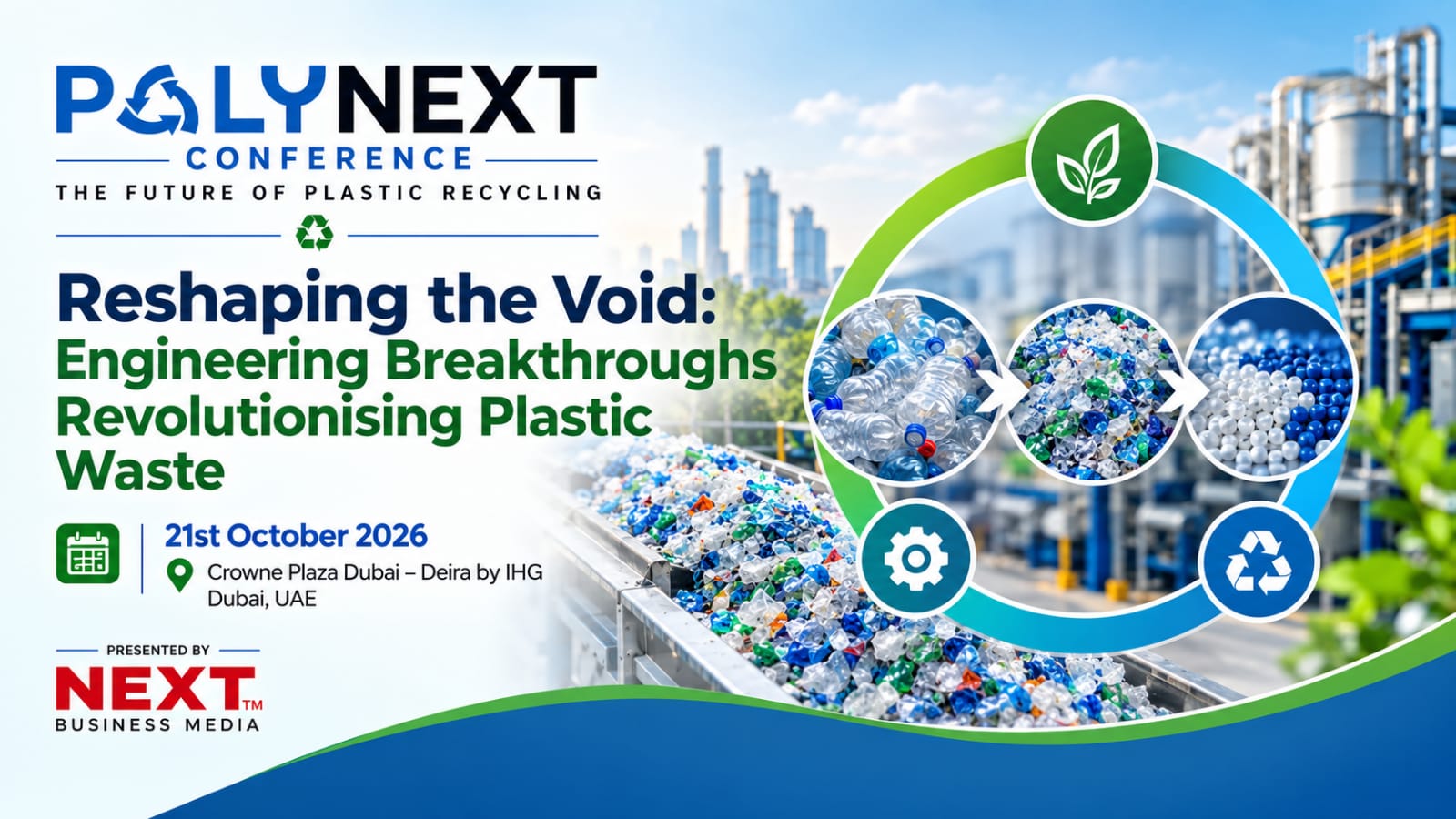
Building a higher-value circular plastics economy demands collaboration across polymer science, recycling, manufacturing, packaging, infrastructure, and technology. Join industry leaders at the PolyNext Awards & Conference to explore the technologies and materials shaping the future of plastics. Learn more: https://polynextconf.com