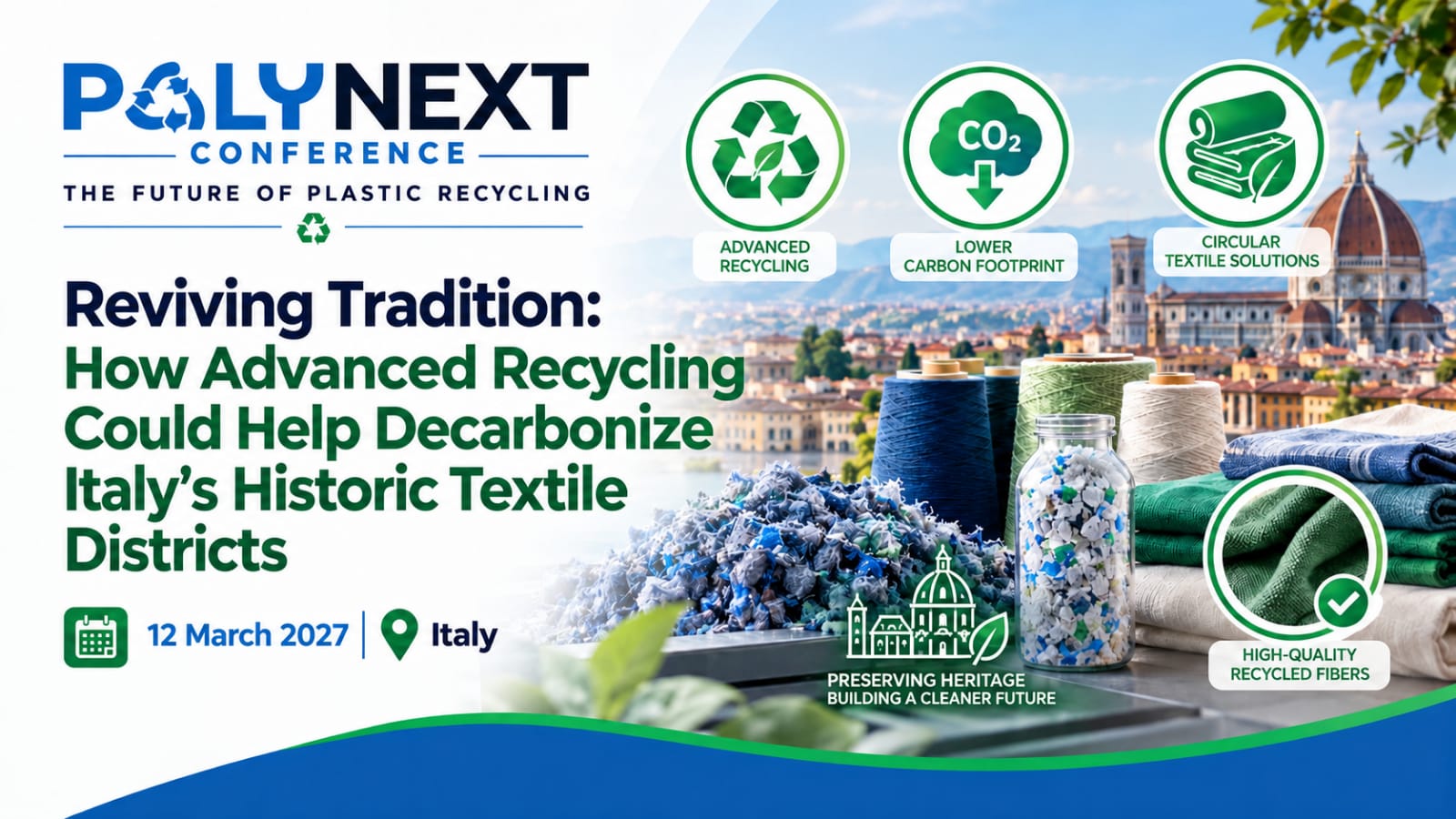
Italy’s historic textile districts—from the wool mills of Prato and Biella to the silk industry of Como—have spent centuries shaping the country’s reputation for quality and craftsmanship. Today, these industrial hubs face a new challenge: reducing environmental impacts while preserving their competitive position in the global fashion industry.
Prato, in particular, has a long history of recycling wool. Since the nineteenth century, the district has transformed discarded garments and textile scraps into reusable fibers and yarns. This established circular model offers valuable lessons for modern textile manufacturing. However, today’s clothing often contains complex blends of natural and synthetic fibers, including cotton, polyester and elastane, which can be difficult to separate and recycle.
Advanced recycling technologies are creating new opportunities to recover these materials, reduce textile waste and support the transition towards more circular production systems.
The Challenge of Recycling Modern Fabrics
Mechanical recycling remains an important part of textile recovery, particularly for wool and relatively uniform textile waste. However, repeated mechanical processing can shorten fibers and reduce their quality. Mixed-fiber fabrics create additional challenges because their components may require different treatment methods.
When recovered fibers cannot meet the quality requirements of new garments, they may be used in lower-value applications, including insulation and other nonwoven materials. Meanwhile, producing new synthetic fibers requires energy and often relies on fossil-based raw materials.
For Italy’s textile manufacturers, the challenge is to retain the value of discarded materials while reducing waste, resource consumption and emissions across the production chain.
Advanced Recycling: Recovering More Value from Textile Waste
Advanced recycling includes several chemical and biological processes designed to recover useful materials from textile waste. The most suitable method depends on the fibers, dyes, finishes and other substances present in the fabric.
Chemical recycling can break certain polymers into their constituent building blocks, known as monomers. For example, polyester depolymerization can recover monomers that are purified and used to manufacture new polyester. Other chemical processes use selective dissolution to separate particular polymers from mixed materials.
Enzymatic recycling uses specialized enzymes to break down selected materials under suitable conditions. Certain enzymes can help process cellulose-based fibers, while other biological processes can target specific polymers. However, these methods are not universally suitable for every textile blend, and effective separation depends on the fabric’s composition.
When successfully implemented, these technologies can complement mechanical recycling and expand the range of textile waste that can be recovered. Their environmental benefits depend on factors such as energy consumption, chemical use, material recovery rates and the quality of the recycled output.
How Italy’s Textile Districts Can Advance Circular Manufacturing
Italy’s textile districts have an important advantage: specialized businesses involved in spinning, weaving, dyeing, finishing and material recovery operate within established industrial networks. These connections can support collaboration between manufacturers, recyclers, technology developers and research organizations.
Prato provides a practical example of this approach. In July 2026, the city inaugurated a Textile Hub designed to improve textile waste recovery and material reuse. The facility uses automated systems and near-infrared sensors to identify and sort textiles by fiber composition and color, supporting more efficient material recovery. It has a reported processing capacity of up to 33,000 tones of textile material annually. (Source: Plure)
This development demonstrates how established recycling expertise can be combined with modern sorting technology and industrial infrastructure. Further investment in chemical recycling, improved material identification and fiber separation could help expand the range of textiles suitable for recovery.
Similar collaboration across Italy’s textile districts could strengthen local supply chains and improve access to secondary raw materials. However, achieving effective closed-loop production will also require reliable waste collection, consistent material quality and economically viable recycling processes.
Decarbonizing Textiles Through Innovation
Advanced recycling is not a standalone solution to fashion’s environmental challenges. Longer product lifetimes, reuse, durable design, reduced production waste and efficient manufacturing remain essential. Recycling technologies can complement these measures by recovering materials that would otherwise be difficult to reuse.
For Italy’s historic textile districts, the opportunity lies in combining traditional craftsmanship with modern materials science. By investing in suitable recycling infrastructure and strengthening cooperation across the value chain, these districts can preserve their industrial heritage while developing more resource-efficient production models.
The transition will depend on practical implementation, measurable environmental improvements and the ability to produce recycled materials that meet the quality standards of demanding textile applications.
Shape the Future of Sustainable Textiles
Explore the technologies, strategies and business opportunities shaping the future of plastics and materials recycling at the upcoming PolyNext Awards and Conference Italy . Connect with industry leaders and innovation experts working to advance circular manufacturing and more sustainable material value chains.
Register for PolyNext Italy and be part of the conversation.