Italy has long turned craftsmanship, design and manufacturing excellence into a global competitive advantage. The next opportunity is to apply that same Made in Italy standard to recycled materials by building a reliable domestic supply chain for food-grade recycled polyethylene terephthalate (rPET) and high-quality post-consumer recycled (PCR) plastics. This would help reduce reliance on imported recyclate, strengthen packaging supply chains and support Italian manufacturers in meeting Europe's circular-economy requirements.
Italy already has a strong circular foundation. COREPLA’s national system intercepted more than 1.5 million tones of plastic packaging in 2024 and recycled over 930,000 tones, while avoiding nearly 970,000 tones of CO2-equivalent emissions. The next step is to convert more of this collected material into high-value, traceable rPET and PCR for Italian manufacturers.
rPET: Italy’s strongest circular opportunity
rPET is one of the most established opportunities for developing a domestic recycled-plastics market. PET bottles are widely collected and can be sorted and processed into food-contact packaging through approved recycling and decontamination technologies.
Italian recycler Dentis demonstrates this potential. Based in Sant’Albano Stura, Piedmont, the company operates bottle-to-bottle recycling facilities and produces food-grade rPET pellets under its REPETER brand. Its two Starlinger recycling lines have a combined annual output capacity of 50,000 tones of bottle-grade rPET pellets. Dentis processes post-consumer PET bottles sourced through Italian and European selected plastic-waste collection circuits.
This model offers a practical direction for Italy: connect local collection with advanced sorting, certified food-grade processing and long-term supply agreements with Italian packaging manufacturers and brand owners. It can turn discarded bottles into a valuable industrial resource rather than allowing recyclable material to leave the domestic supply chain.
PCR: The larger and more complex opportunity
While PET has a relatively established bottle-to-bottle recycling pathway, PCR polyolefins, particularly recycled polypropylene (rPP) and recycled polyethylene (rPE), present a broader technical challenge. These materials come from more varied waste streams, including rigid containers, films, crates and mixed packaging. Their quality depends on effective sorting, washing, filtration, extrusion and compounding.
Italy is investing in the infrastructure needed to address these challenges. In April 2024, IREN inaugurated a €45 million plastic waste-sorting facility near Turin. The facility can process up to 100,000 tones of plastic waste annually, identify and separate 17 types of polymers and plastics, and direct up to 80% of incoming material towards recycling facilities.
Investments like this are important because high-quality PCR is not simply recycled plastic. It must be engineered to meet the mechanical, aesthetic, processing and regulatory requirements of its intended application. Improving material consistency is essential if Italian converters and brands are to use more domestic PCR in their products and packaging.
What a competitive domestic supply chain requires
Building a competitive Italian rPET and PCR market requires four elements to work together:
Quality feedstock: Better waste separation, consistent collection systems and investment in optical and AI-enabled sorting can improve the quality of material entering recycling facilities.
Certified processing capacity: Italy needs continued investment in food-grade rPET production, advanced washing, extrusion, filtration and compounding technologies for different PCR applications.
Traceability and quality assurance: Digital documentation of feedstock origin, processing methods, recycled content and material specifications can help manufacturers verify quality and build confidence in recycled materials.
Guaranteed market demand: Long-term purchasing agreements between recyclers, packaging converters and brand owners can provide the commercial certainty needed to justify investment in recycling infrastructure.
Regulation is also strengthening the business case. Under the EU Single-Use Plastics Directive, PET beverage bottles must contain at least 25% recycled plastic on average from 2025. The EU Packaging and Packaging Waste Regulation (PPWR) also introduces higher recycled-content targets for plastic packaging from 2030, with requirements varying by packaging category. These measures create a stronger incentive for manufacturers to secure reliable supplies of compliant recycled materials.
For Italy, the opportunity is not only to meet regulatory targets but also to build stronger connections between domestic waste collection, recycling technology and packaging manufacturing.
Join PolyNext Awards and Conference Italy
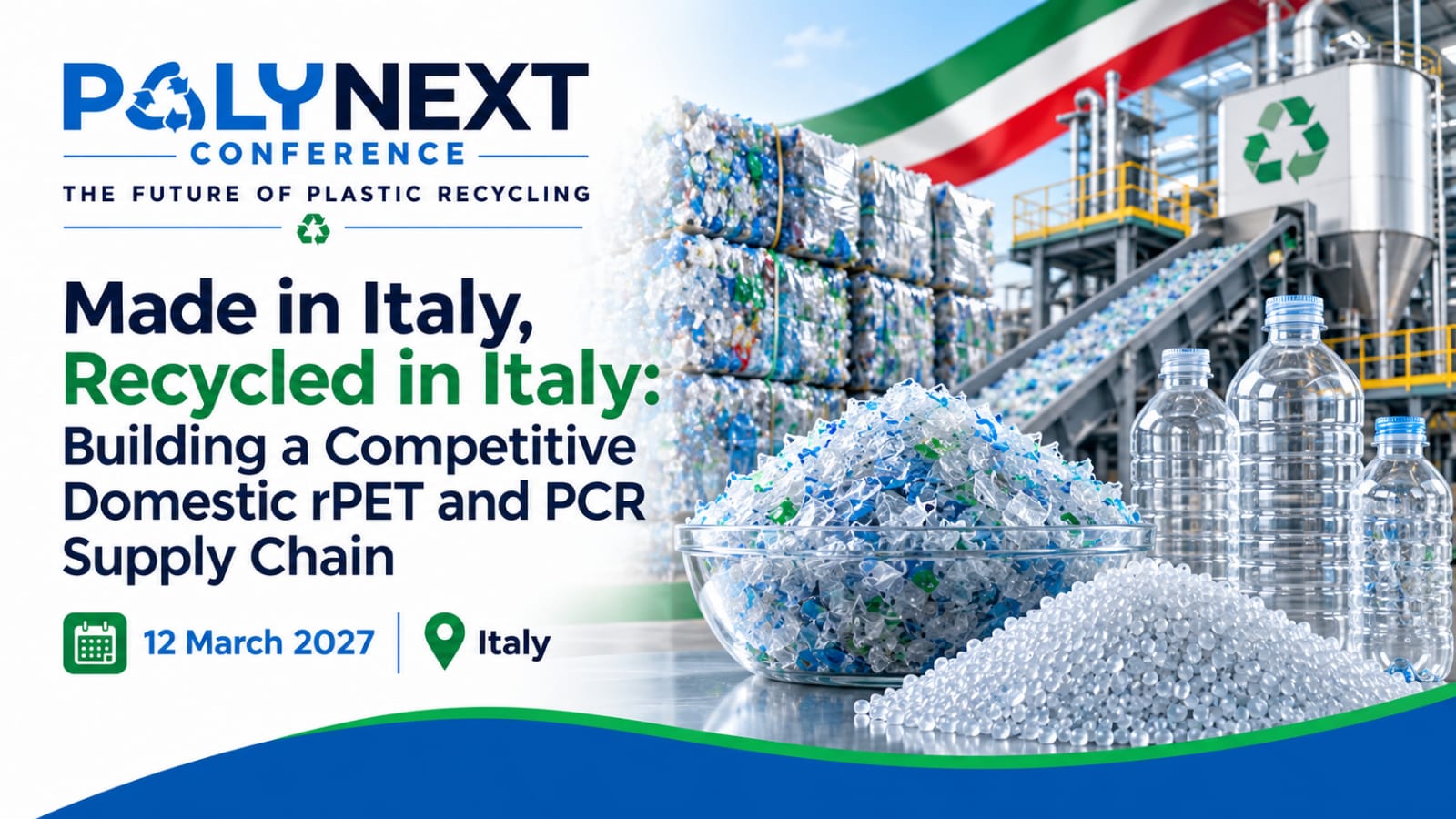
PolyNext Awards & Conference Italy 2027, takes place in Rome on 12 March 2027, bringing together recyclers, converters, brand owners, technology providers, policymakers, and investors to advance plastic recycling, sustainable packaging, and the circular economy.
Join us in Rome to explore how Italy can build stronger domestic rPET and PCR supply chains—and turn collected plastics into high-value, traceable materials that strengthen Made in Italy manufacturing.